Chapter 1
The Heart of the Korean Table
View / Create
Answer
Chapter 2
The Magic of Korean Street Food
View / Create
Answer
Chapter 3
Grilling and Social Dining
View / Create
Answer
Chapter 4
Balance and Healing Ingredients
View / Create
Answer
YOUR GOAL
Master of The colors of korean food
Ch 4 · Balance and Healing Ingredients

federico Korean Food Healing Balance
For a body feelin' bright and grand, yeah? Five vibrant colors, balanced by hand!

Quiz
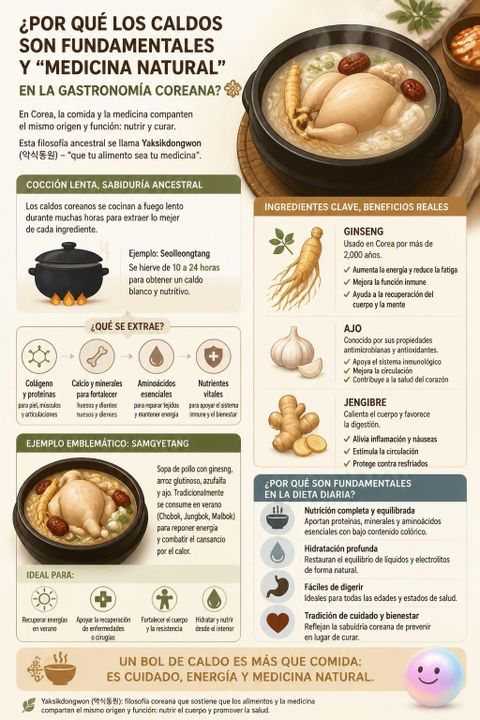
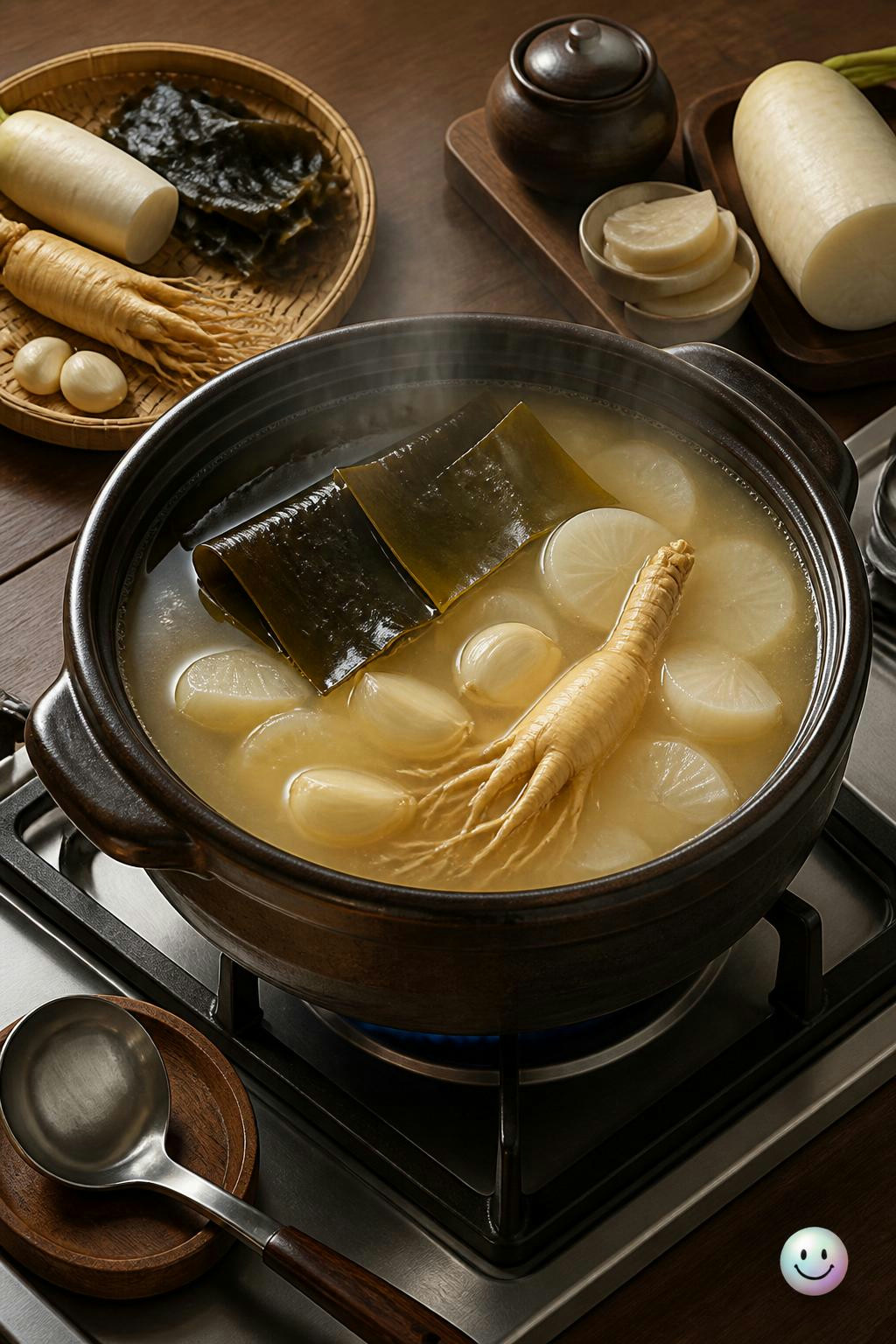
En la cocina coreana, bajo la filosofía de que «la comida y la medicina comparten el mismo origen» (*Yak sik dong won*), ¿cuál es el beneficio principal de cocinar caldos a fuego lento con ingredientes como algas, raíces y vegetales?
Quiz
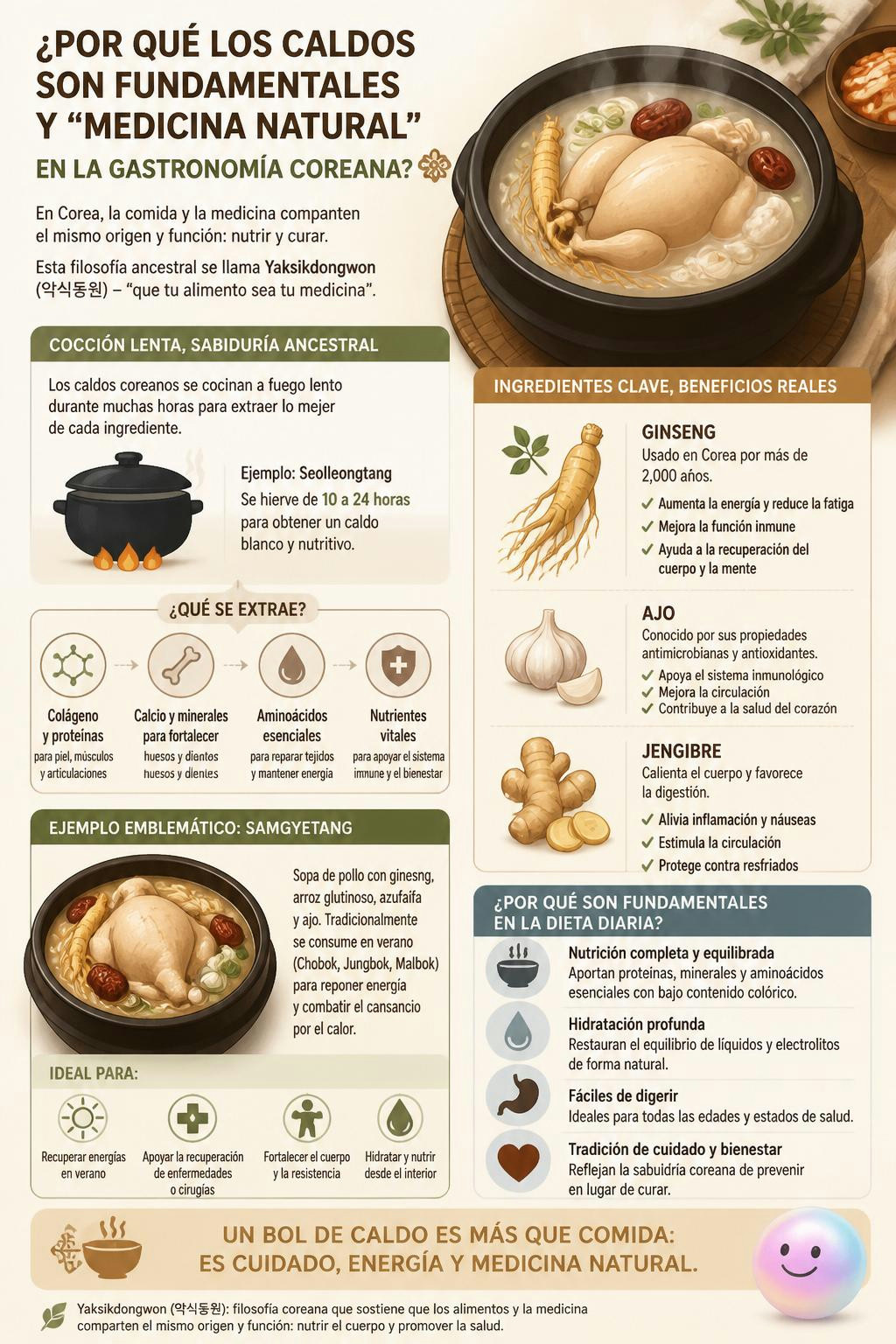
¿Por qué los caldos se consideran fundamentales y una forma de "medicina natural" en la gastronomía coreana?
Quiz
In traditional Korean culinary medicine, the name of the herbal infusion Ssanghwa-cha (쌍화차) translates to 'double harmony.' Which core philosophy of healing and balance does this name represent?
Quiz
En el bibimbap, los cinco colores tradicionales (blanco, negro, verde, rojo y amarillo) representan los elementos de la:
Glossary
Yakcha (noun)
Traditional Korean medicinal teas brewed from roots, herbs, and fruits to restore bodily harmony. In Korean culinary history, these therapeutic drinks act as liquid balance, harmonizing internal energy after a meal.
Traditional Korean medicinal teas brewed from roots, herbs, and fruits to restore bodily harmony. In Korean culinary history, these therapeutic drinks act as liquid balance, harmonizing internal energy after a meal.
Fun Fact
Fighting Heat: Koreans eat boiling ginseng chicken soup on summer's hottest days to sweat. This healing dish naturally cools the body and restores vital inner energy.

Quiz
In Korean culinary culture, what is the primary health philosophy behind the traditional practice of 'iyeol-chiyeol' (fighting heat with heat), which involves eating steaming-hot soups on the hottest days of summer?

Glossary
obangsaek (noun)
A traditional Korean color palette of white, black, red, yellow, and blue (often shown as green) that represents the five elements of nature. When these colors are balanced in a bowl of bibimbap, it means the meal is designed to keep your body healthy and your energy in harmony.
A traditional Korean color palette of white, black, red, yellow, and blue (often shown as green) that represents the five elements of nature. When these colors are balanced in a bowl of bibimbap, it means the meal is designed to keep your body healthy and your energy in harmony.
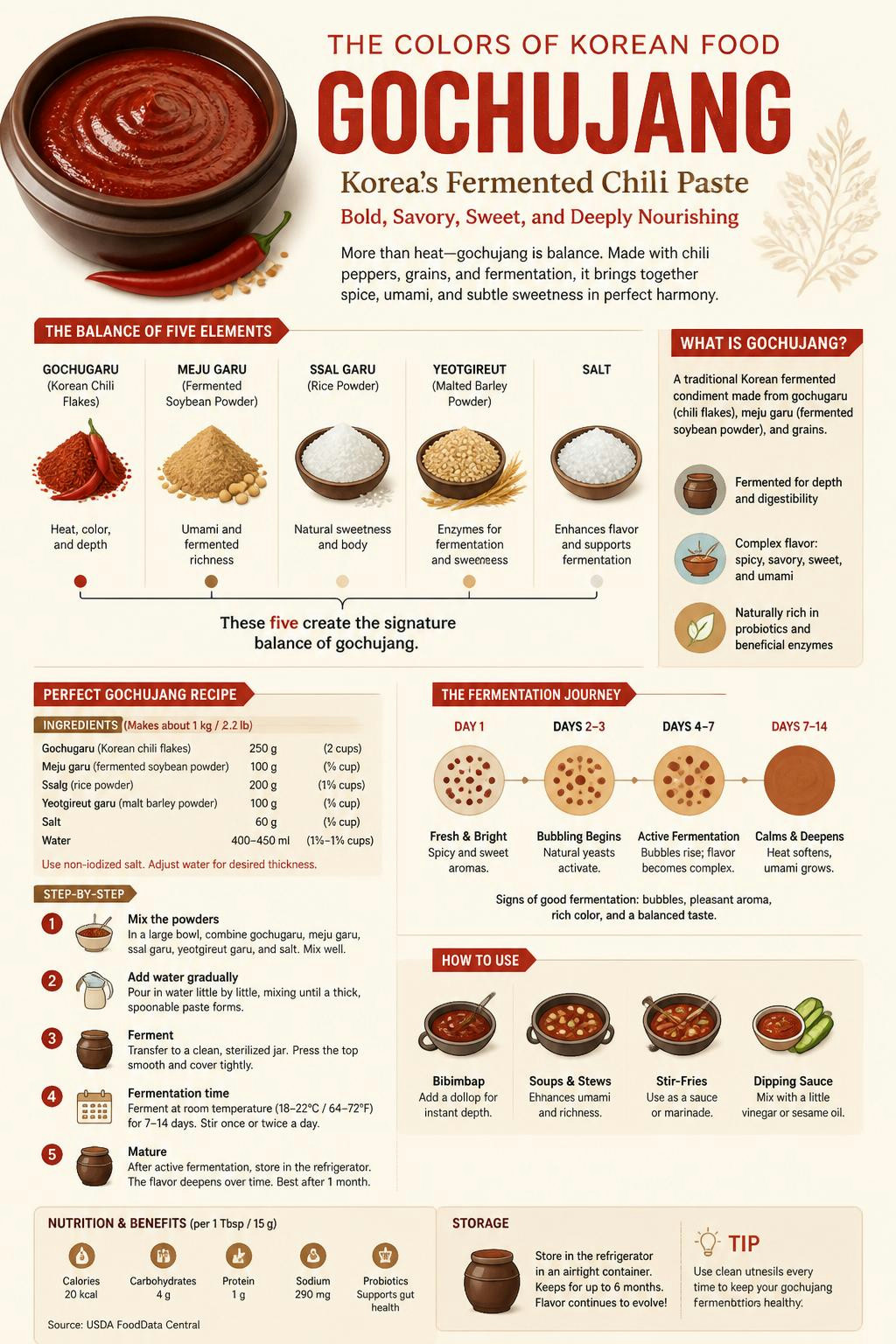
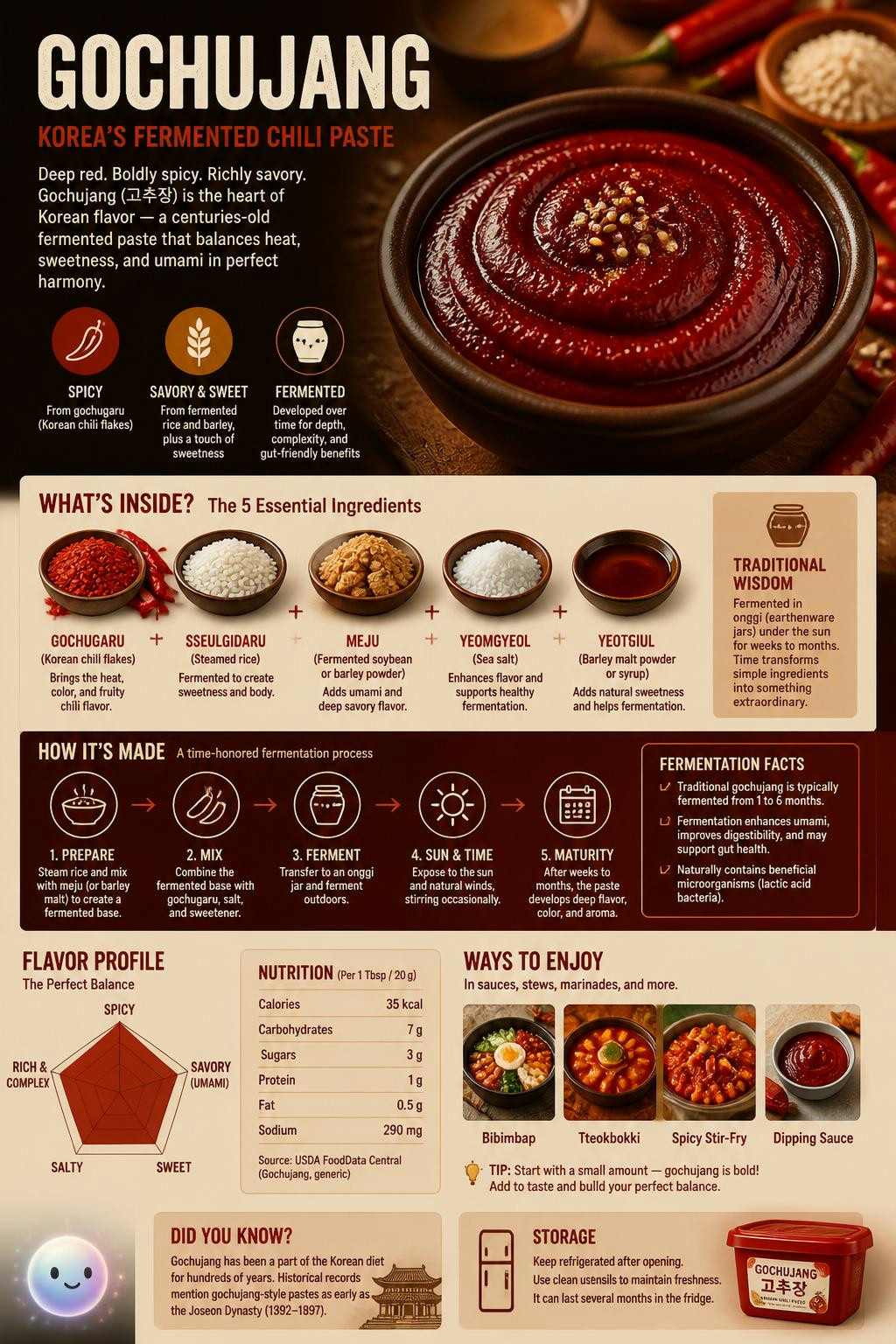
streetspirit I just learned gochujang is actually a healing balance of five colors.