Profile

Yuki
0 friends
Masteries

No masteries yet
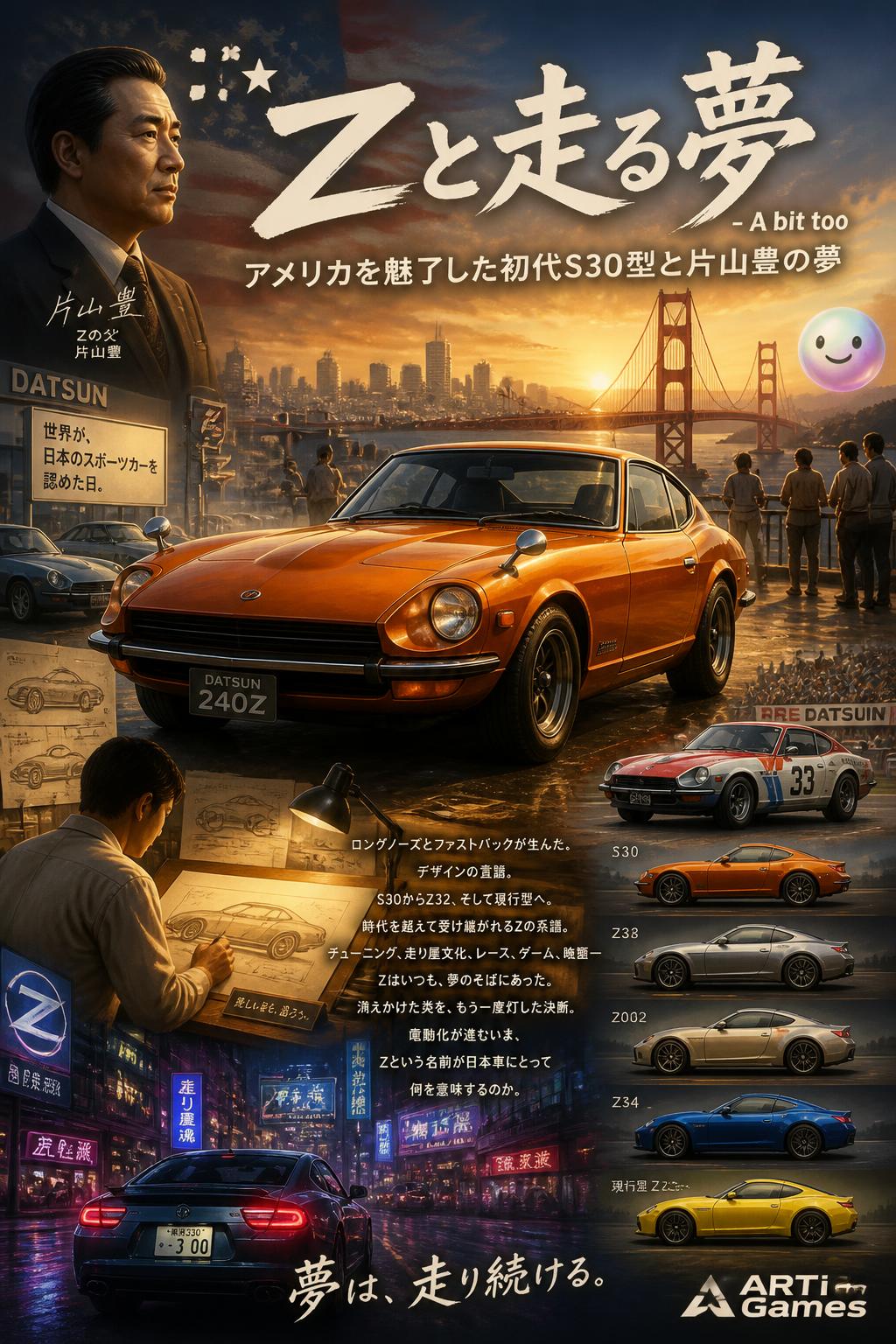
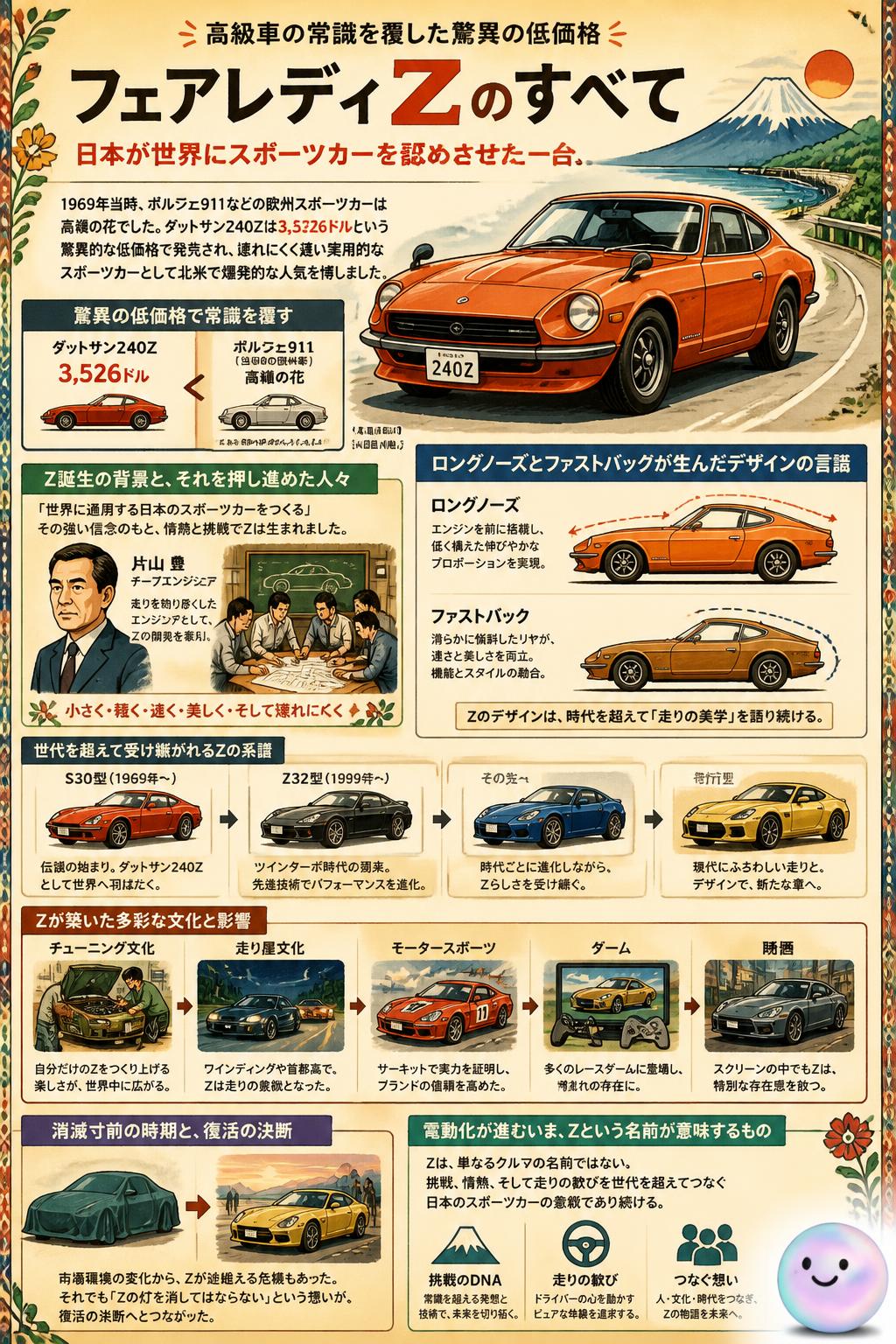
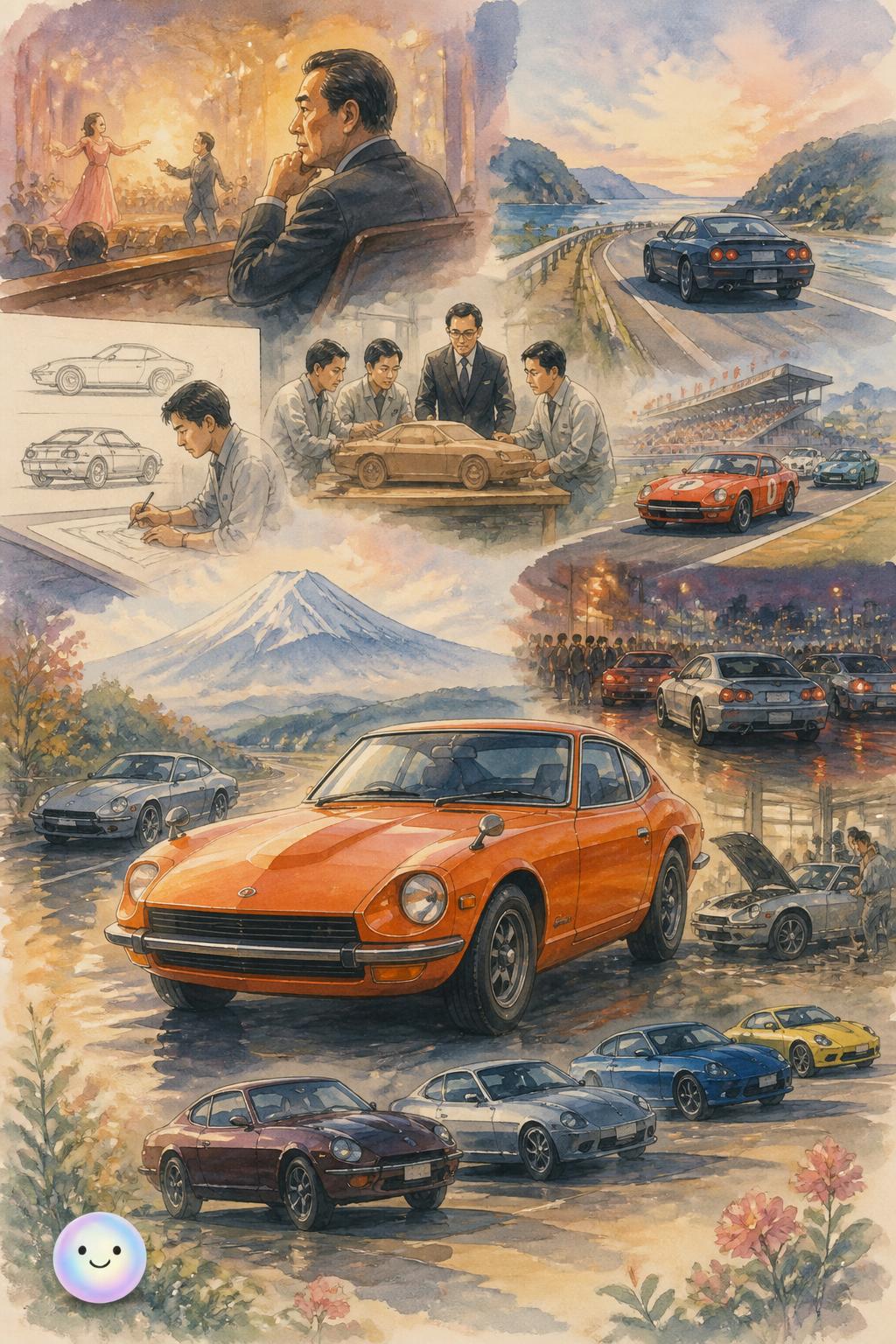
(名詞)日産自動車が海外市場向けに製造・販売したスポーツカー。片山豊の主導により1969年に北米で発売され、大ヒットを記録した。

yuki Build the legendary Fairlady Z to discover how this Japanese icon redefined affordable sports cars.
yuki Nissan Fairlady Z S30
The long sleek hood, / The straight-six roar, / A brand new game.
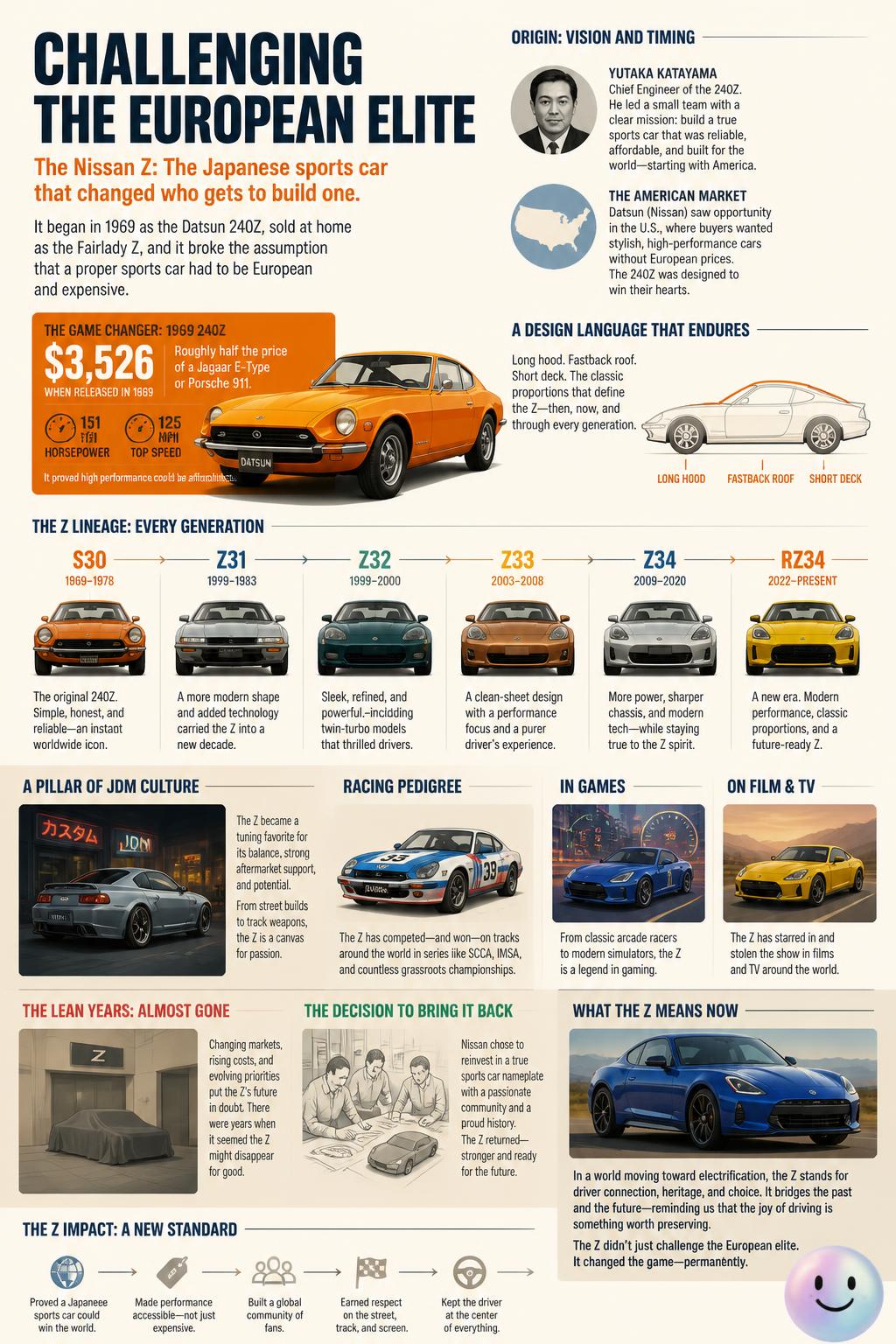
yuki The Datsun 240Z shattered the belief that only expensive European brands could build a world-class sports car.
Grassroots marketing: Mr. K used to hand out yellow Z pins to everyone he met to build a grassroots enthusiast club.

yuki Yutaka Katayama, known as Mr. K, defied conservative Nissan executives in Tokyo to champion an affordable, high-performance sports car.
An entity that introduces innovation that upsets and replaces an established technology, product, or market. In 1969, Yutaka Katayama launched the Datsun 240Z, shattering European dominance in the American sports car market.
Approximately how much did the original Datsun 240Z cost when it debuted in the US in 1969?
Under what brand name was the original 240Z sold in North America during the early 1970s?
In what year did the original Datsun 240Z make its official public debut?
What did the number 240 stand for in the original Datsun 240Z sports car?
Which region's expensive sports cars did the Datsun 240Z primarily challenge in terms of price and performance?
Which Nissan executive is widely considered the father of the Z car for championing it in America?
Why was Yutaka Katayama originally sent to the United States by Nissan's Japanese executives in 1960?
What was the original domestic name of the Nissan Z when it launched in Japan in 1969?
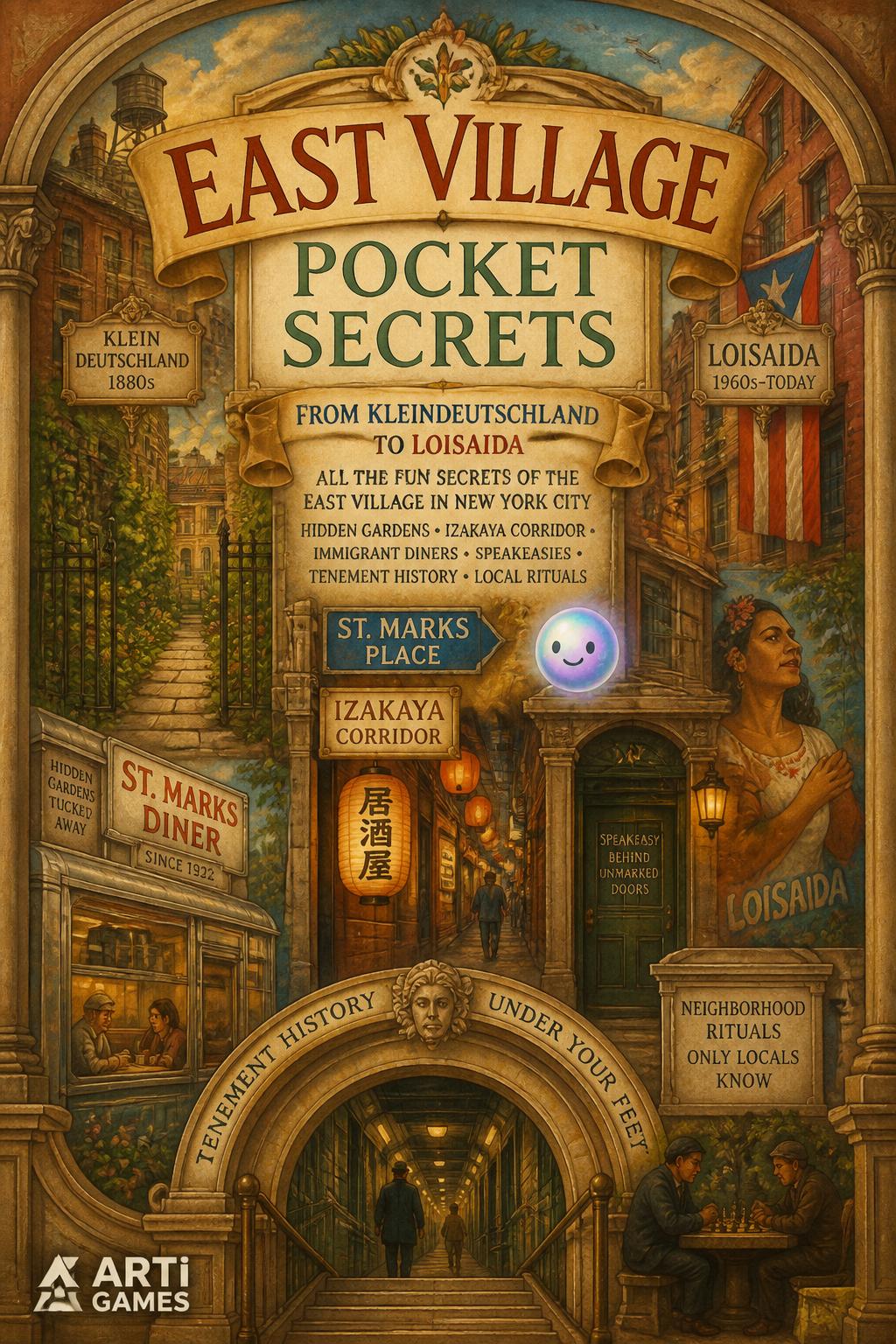
yuki Match unmarked doors to discover the hidden gardens and secret speakeasies of the East Village.
yuki Kleindeutschland to Loisaida
From Kleindeutschland's busy avenues and halls, To Loisaida's music painted on the walls.
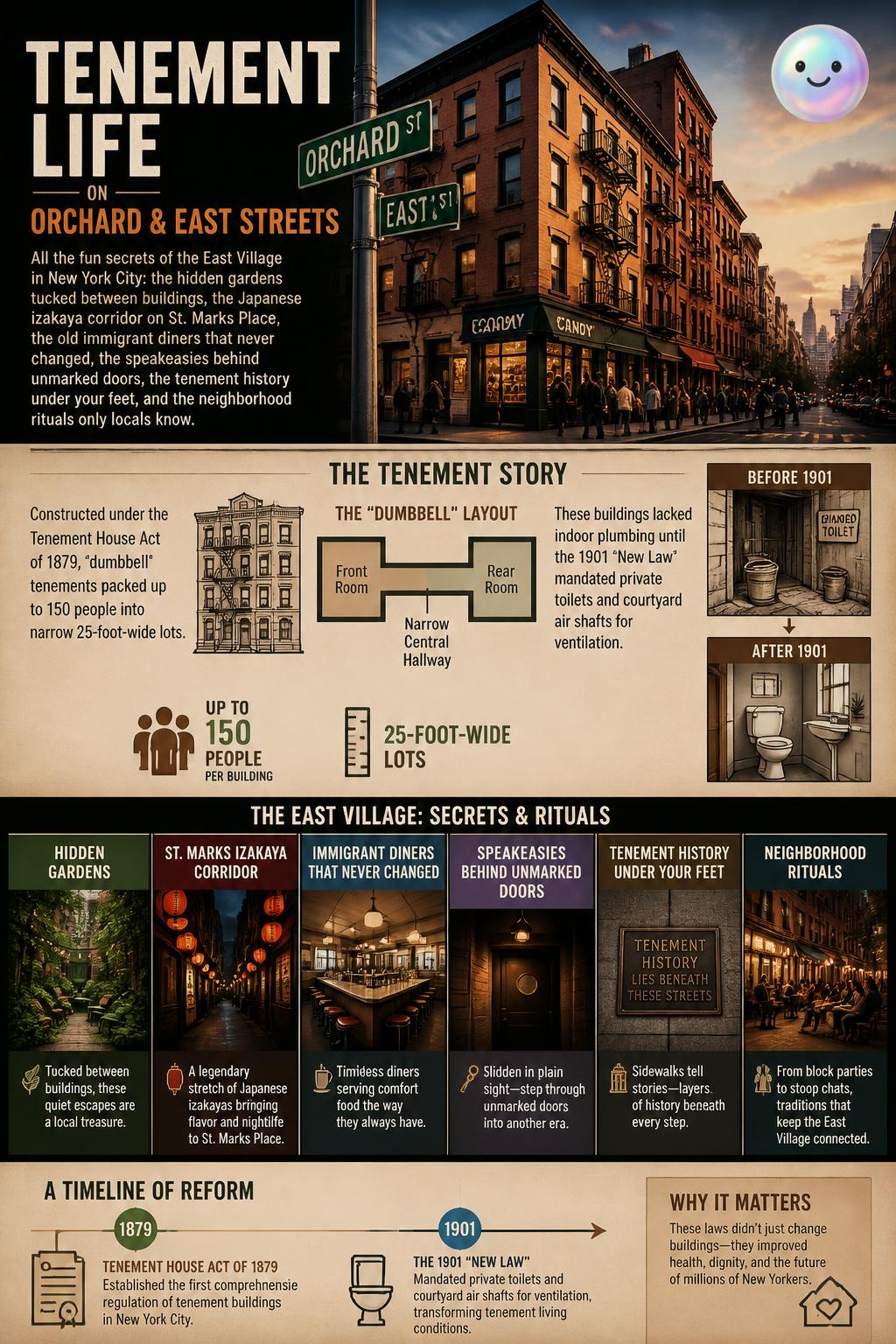
yuki Multi-family tenement buildings defined the living conditions and architectural landscape of the neighborhood's working class.
Ottendorfer Library: Built in 1884 on Second Avenue, this is New York's oldest free public library, originally designed to serve the area's German-speaking immigrant population.
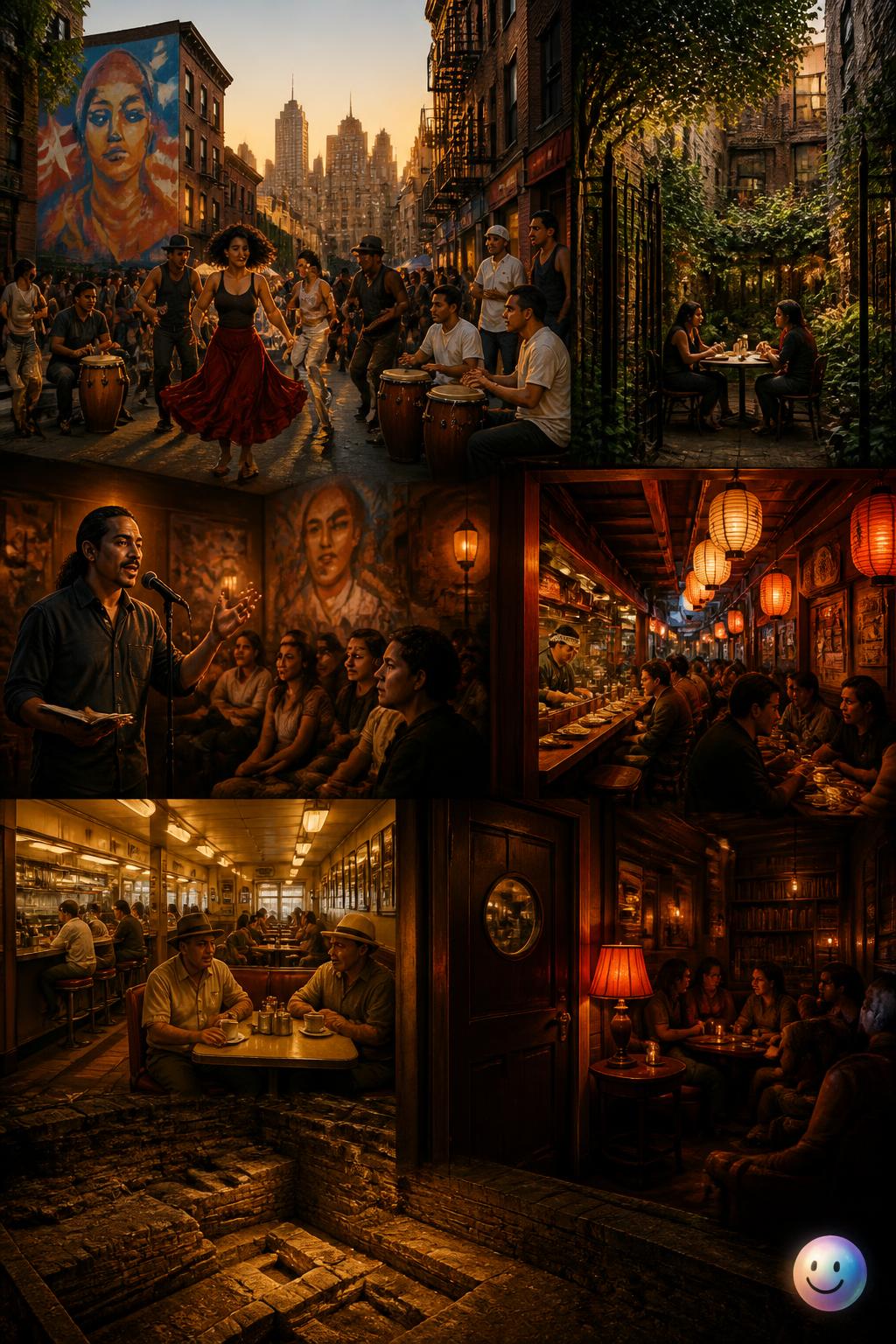
yuki Puerto Rican activists and artists reclaimed the neighborhood in the 1970s, coining the beloved term Loisaida.
A distinct territory or culturally distinct community enclosed within a larger territory. The East Village transitioned from a German immigrant enclave into a Puerto Rican cultural hub by 1970.
What major sanitation upgrade did the Tenement House Act of 1901 mandate for East Village residents?
What was the maximum width of a standard tenement lot in 19th-century New York City?
Which Puerto Rican activist and artist popularized the term 'Loisaida' for the East Village?
Which cultural institution was founded on East 3rd Street in the East Village in 1973 to celebrate Puerto Rican poetry?
What was the 19th-century East Village neighborhood populated by German immigrants called?
What specific architectural layout was mandated by the Tenement House Act of 1879 in New York City?
Which church serves as the spiritual anchor for the East Village's Ukrainian community?
Which tragic 1904 steamboat disaster led to the decline of the East Village's German community?