

BETA
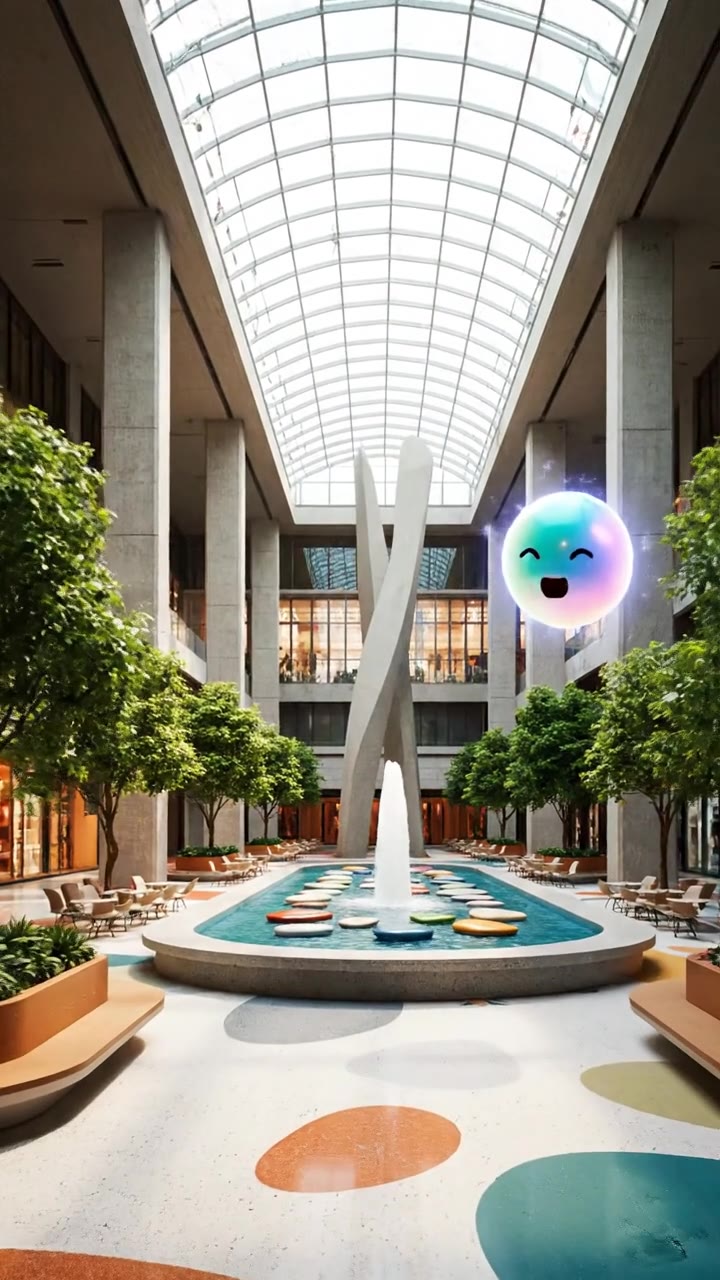
In the 1950s, Austrian-born architect Victor Gruen envisioned the shopping mall as a vibrant, mixed-use civic center. He wanted to combat suburban isolation by integrating housing, medical clinics, and schools into walkable, climate-controlled environments.
marcus Place new stores in your plaza to discover how American malls rise, fall, and adapt.
marcus Austrian architect Victor Gruen envisioned the American mall as a walkable, vibrant civic center.
marcus American Mall's Utopian Roots
Victor Gruen, from old Vienna, saw the suburbs sprawl. He built a mall, a public heart, for gathering us all.
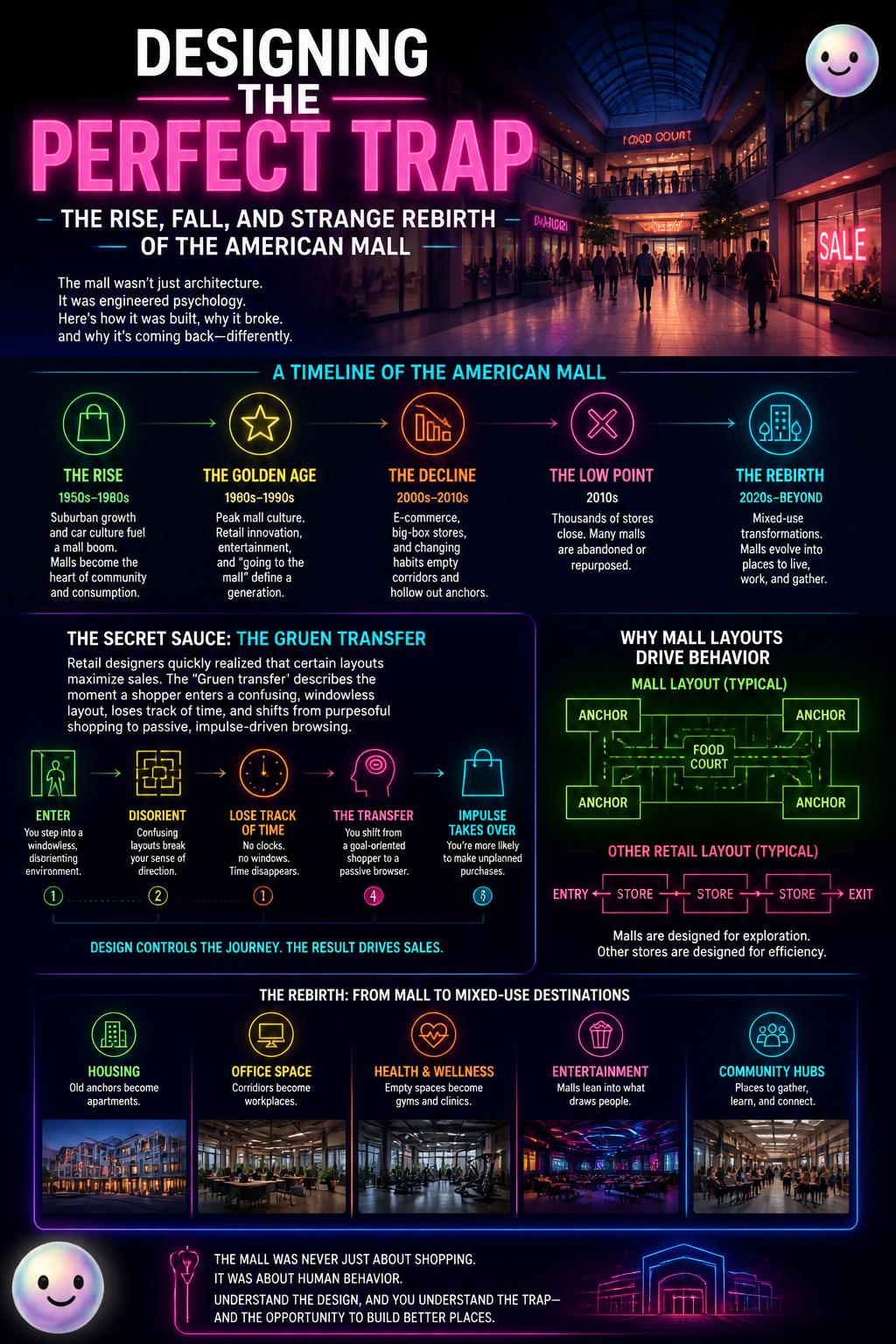
marcus Malls used deliberate architectural tricks, like the Gruen transfer, to disorient shoppers and encourage impulse buying.
The Gruen transfer: The disoriented feeling shoppers get when entering a mall, causing them to forget their original destination, is named after the mall's inventor, Victor Gruen.
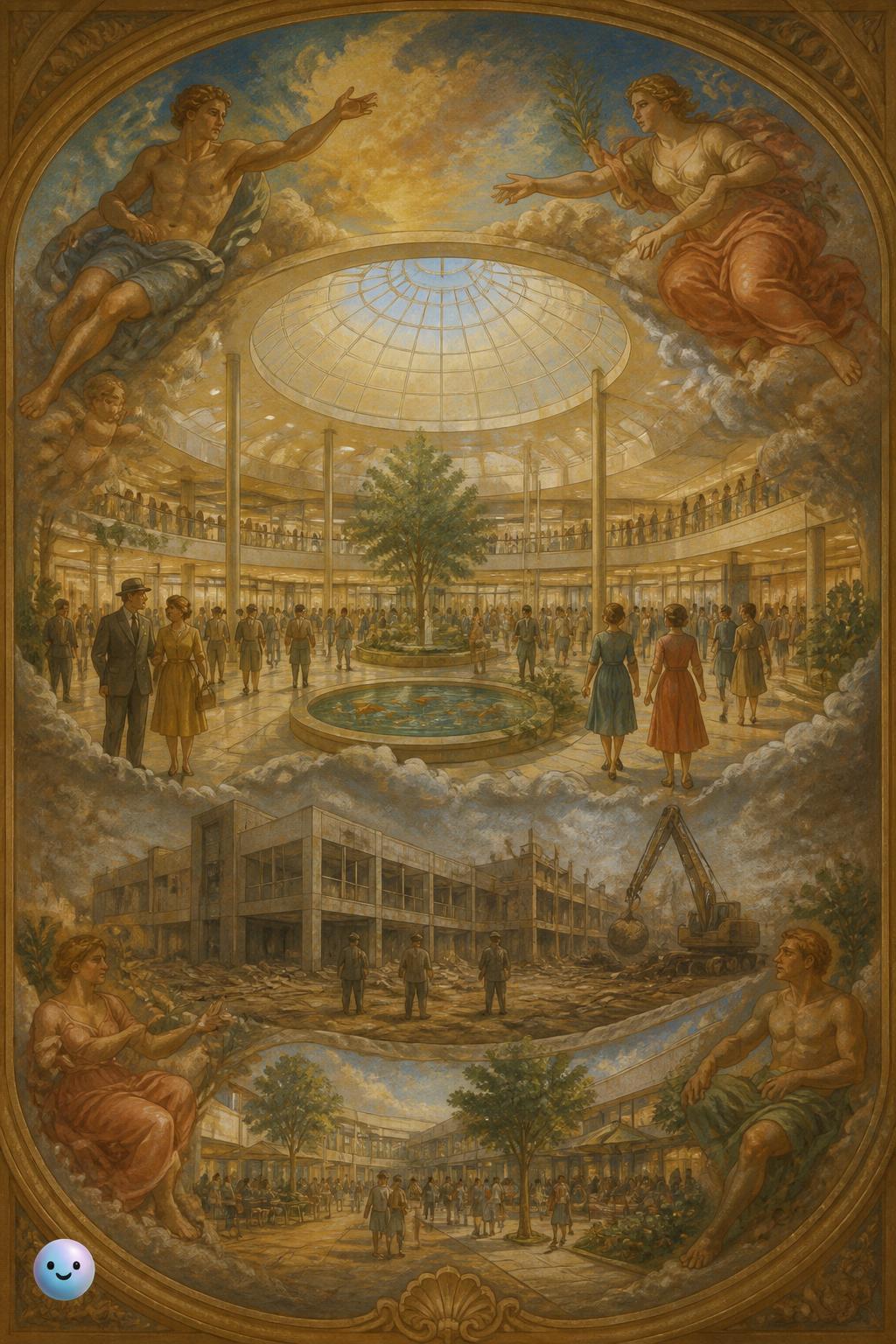
marcus Opened in Minnesota in 1956, Southdale Center was the world's first fully enclosed, climate-controlled shopping mall.
In which US state did the first fully enclosed, climate-controlled shopping mall open in 1956?
Who is considered the pioneer architect of the modern enclosed American shopping mall?
What original purpose did architect Victor Gruen intend for shopping malls besides retail?