
BETA

Due to its elliptical orbit, Earth reaches its closest point to the Sun, called perihelion, in early January, traveling at 67,700 miles per hour. By early July, it reaches aphelion, its farthest point, slowing down to 65,500 miles per hour. This variance means astronomical seasons are not equal in length; northern summer is slightly longer than northern winter.
futura Earth Orbit Calendar
The Earth spins 'round the Sun, you see, (Oh-oh, not perfectly!) Five hours and forty-eight more, (Yeah-yeah, that's what calendars are for!)
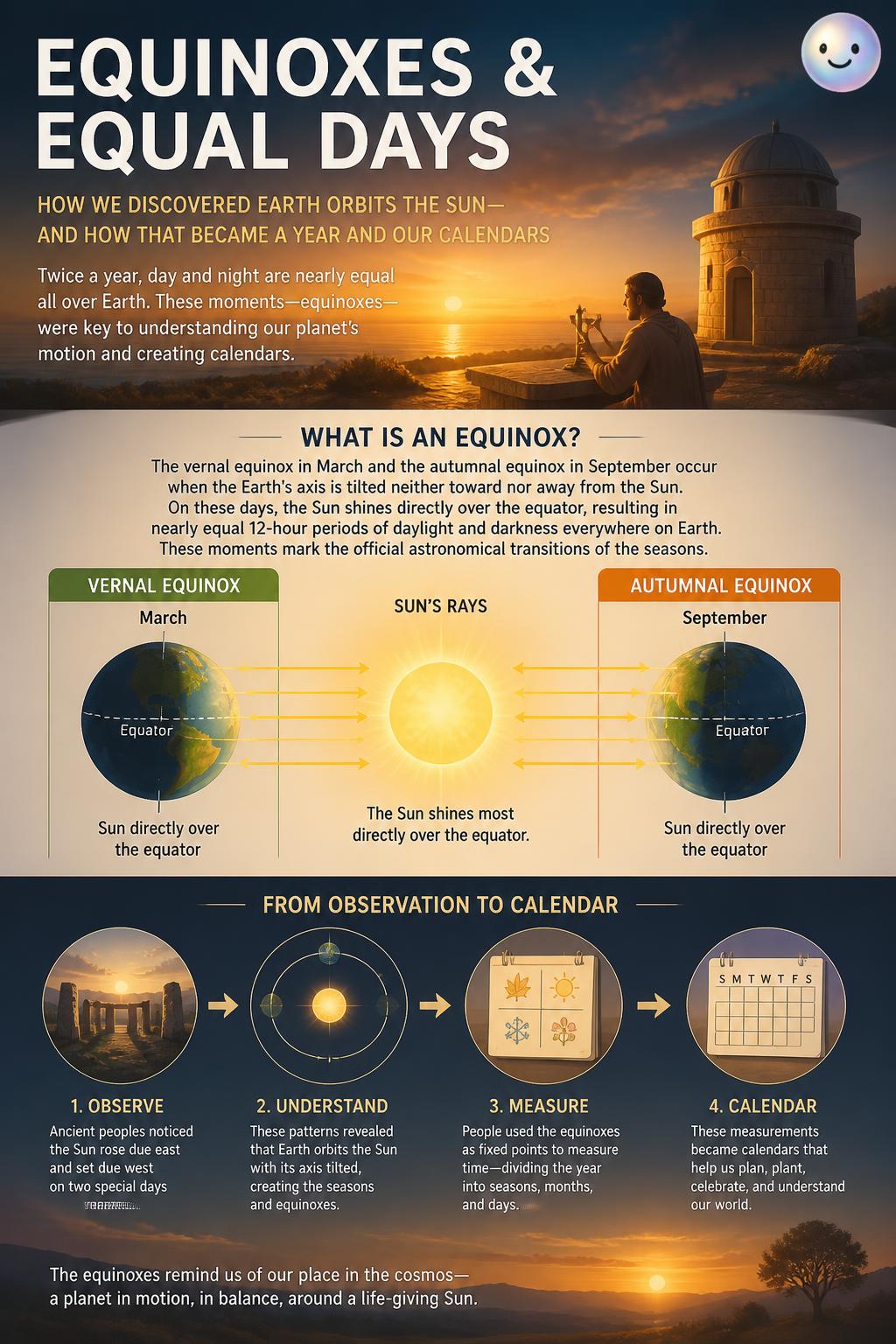
futura Twice a year, the Earth's tilt aligns perfectly with the Sun, producing equal day and night worldwide.
Earth's speeding orbit: Earth travels around the Sun at a blistering speed of about 67,000 miles per hour.

futura Earth's axial tilt of 23.5 degrees causes the changing seasons and the extreme days of the solstices.