
BETA
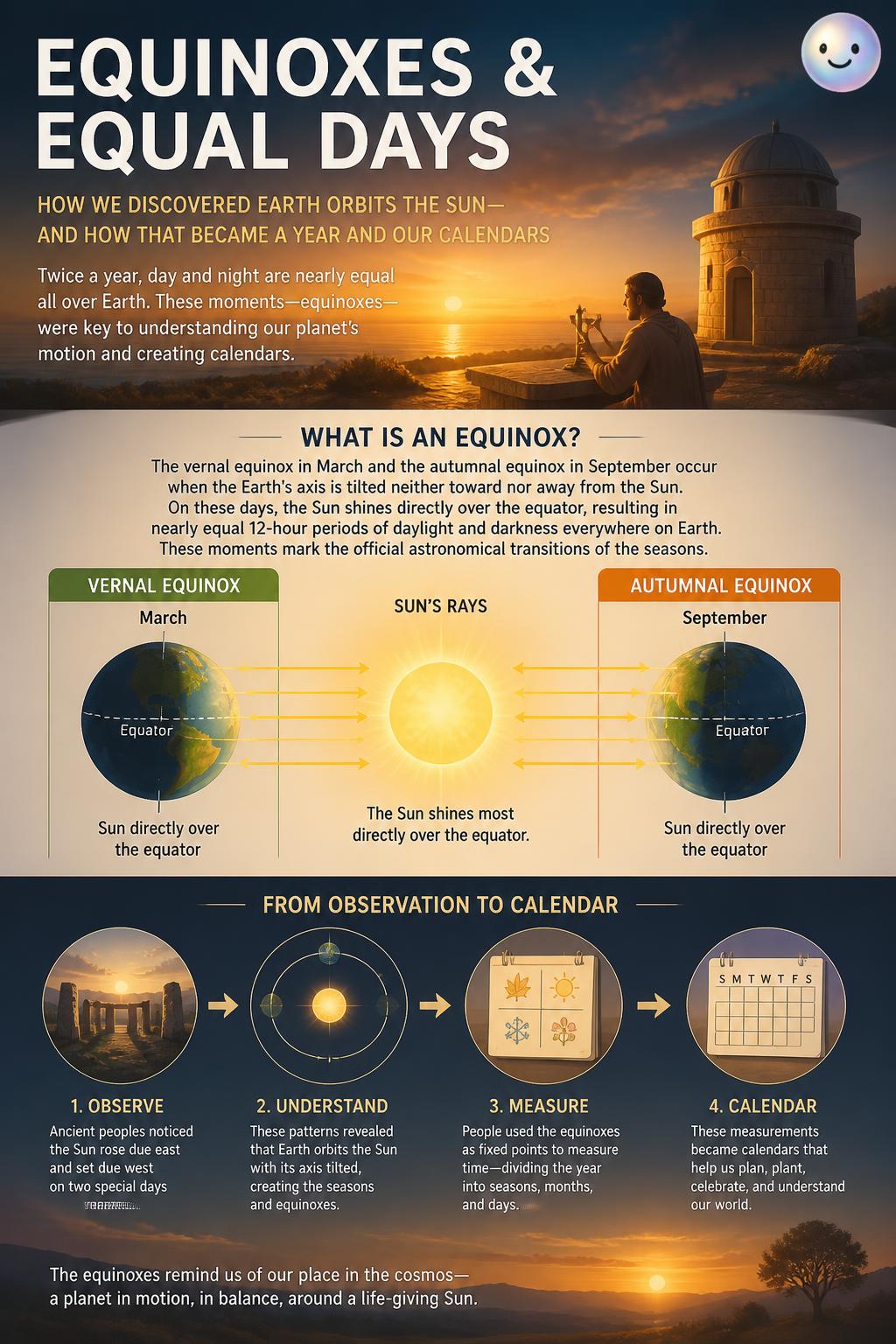
The vernal equinox in March and the autumnal equinox in September occur when the Earth's axis is tilted neither toward nor away from the Sun. On these days, the Sun shines directly over the equator, resulting in nearly equal 12-hour periods of daylight and darkness everywhere on Earth. These moments mark the official astronomical transitions of the seasons.
futura Earth Orbit Calendar
The Earth spins 'round the Sun, you see, (Oh-oh, not perfectly!) Five hours and forty-eight more, (Yeah-yeah, that's what calendars are for!)
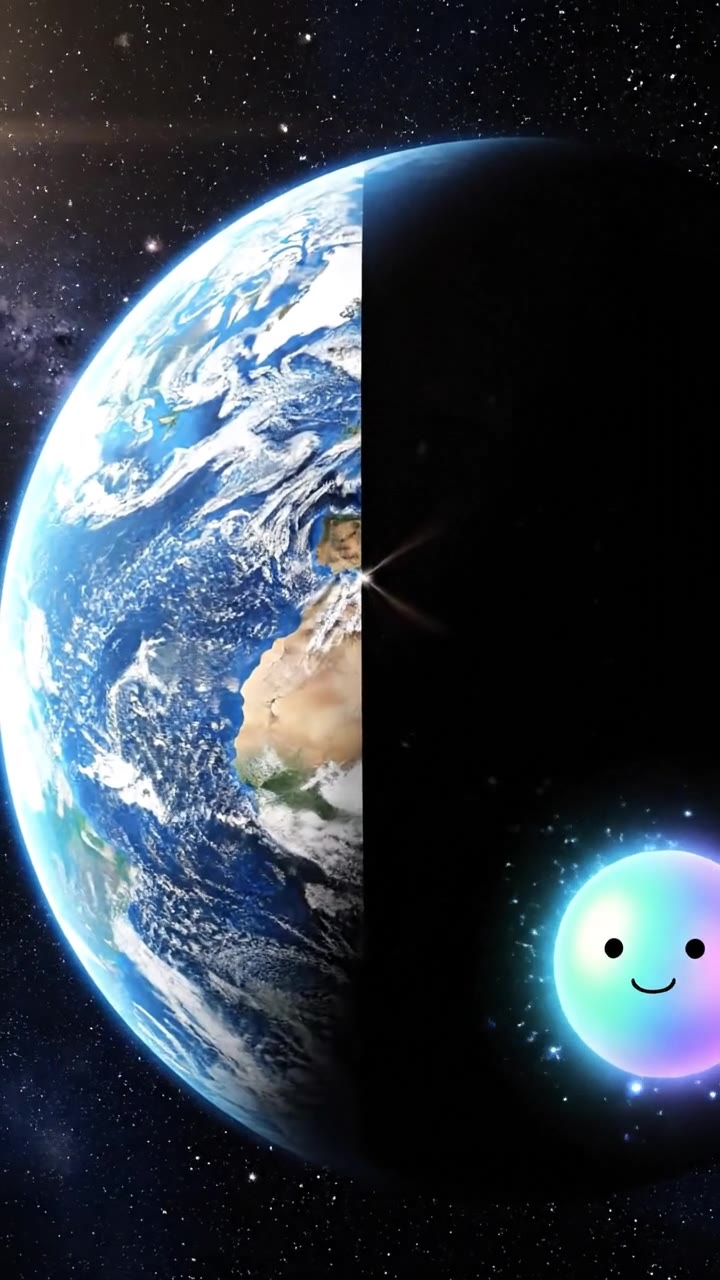
futura Twice a year, the Earth's tilt aligns perfectly with the Sun, producing equal day and night worldwide.
Earth's speeding orbit: Earth travels around the Sun at a blistering speed of about 67,000 miles per hour.
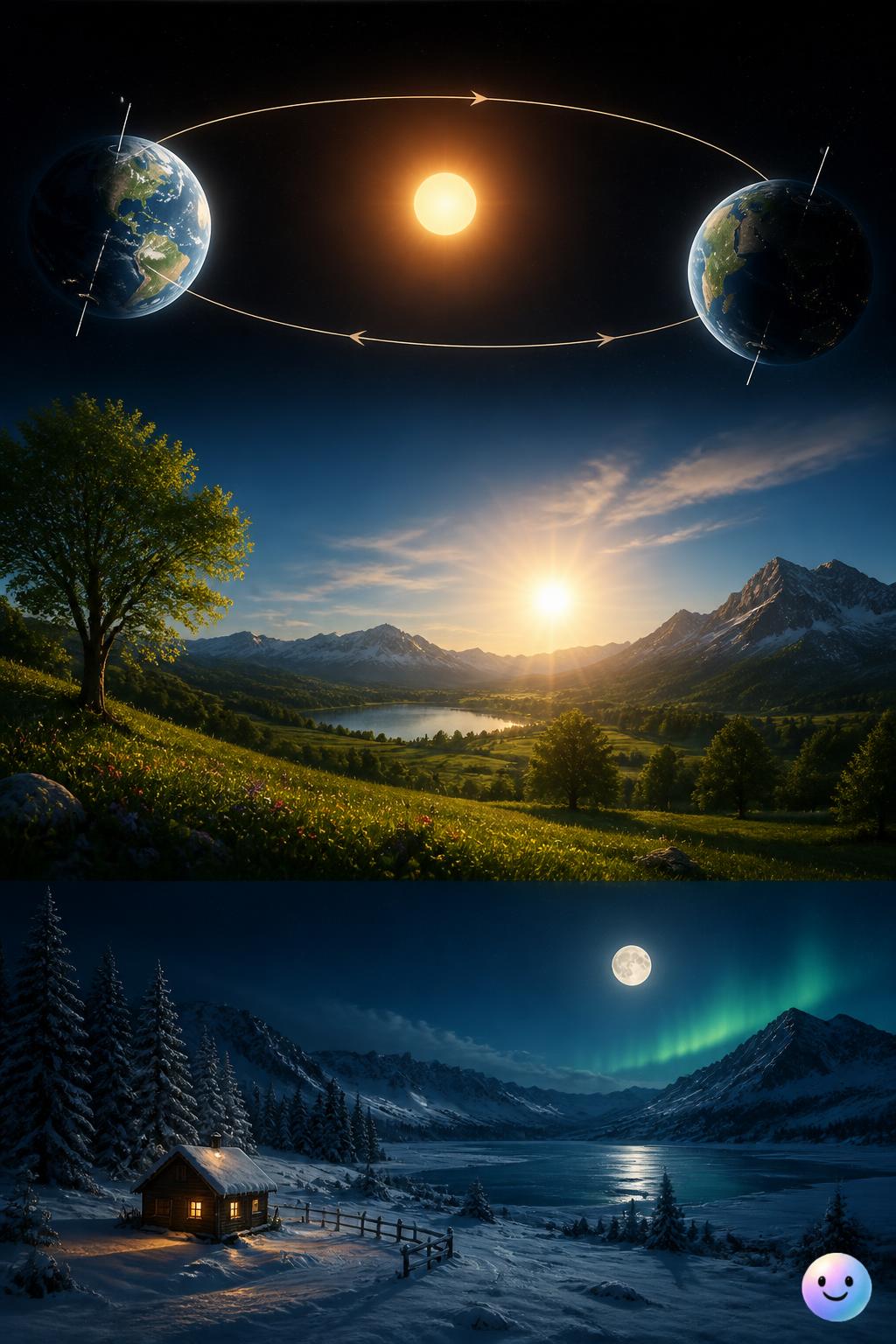
futura Earth's axial tilt of 23.5 degrees causes the changing seasons and the extreme days of the solstices.