

ethical consumerism: (noun) The practice of purchasing goods and services produced in a way that minimizes social and environ

ethical consumerism: (noun) The practice of purchasing goods and services produced in a way that minimizes social and environmental damage. This movement originated in the 1820s when Quaker abolitionists boycotted goods produced by enslaved labor.

Chapter 1

The art of budgeting worldwide

Chapter 2

The mystery of interest and growth

Chapter 3

Navigating debt and the credit system

Chapter 4

Digital money and global banking

Chapter 5

Smart spending and conscious consumerism

Smart spending and conscious consumerism
BETA

nic Smart spending and conscious consumerism

Jul 9

nic Mastering the art of unit pricing

Jul 9

nic The 24 hour rule for purchases

Jul 9

nic The concept of opportunity cost

Jul 9

nic The psychology of impulse buying

Jul 9

nic Smart spending and conscious consumerism

Fifty, thirty, twenty, yeah! Your money flow, you gotta know! Fifty for needs, then watch your savings grow!
Jul 9

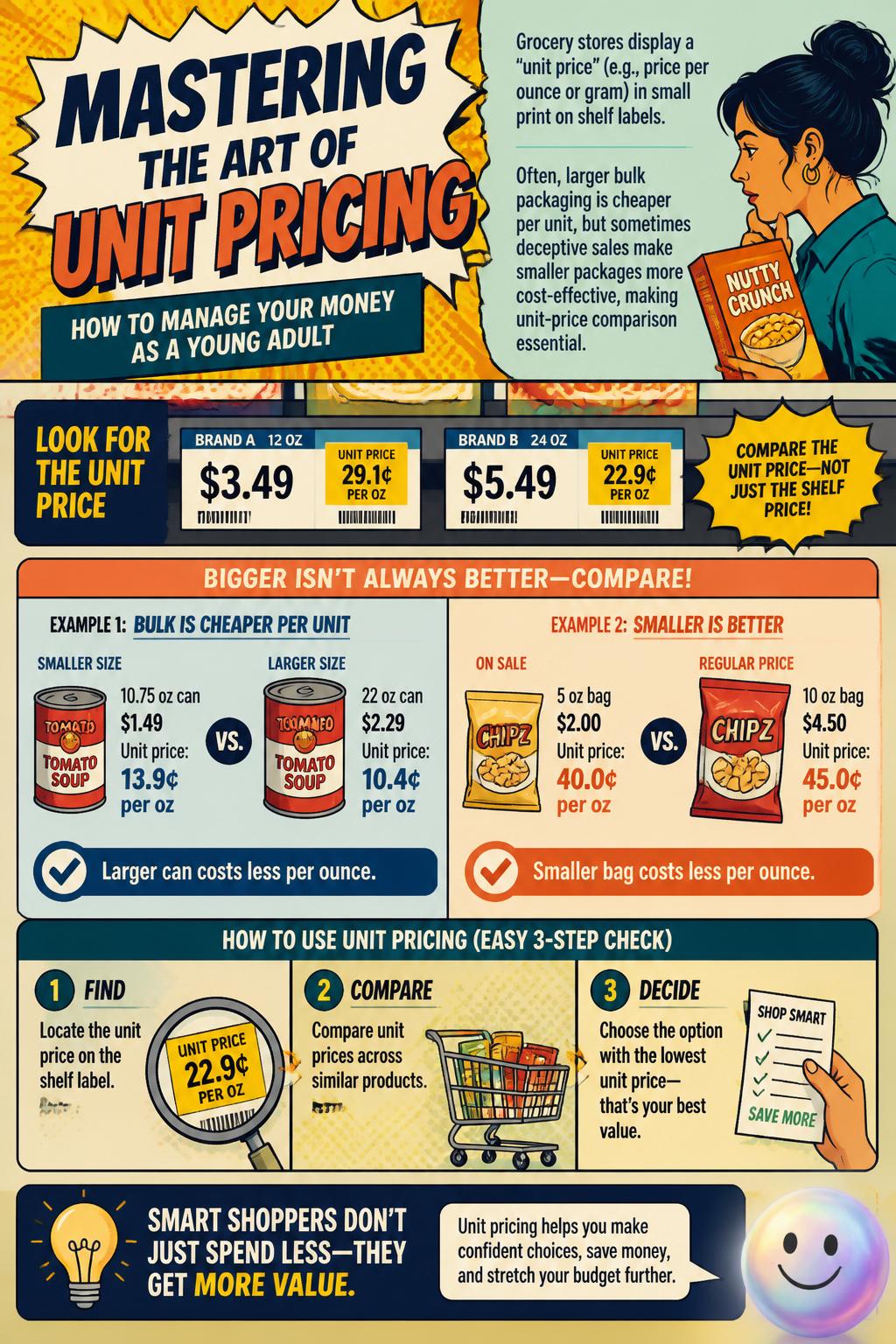
Mastering the art of unit pricing

nic Comparing the price per unit of measurement reveals the true cost of grocery store items.

Jul 9

Fun Fact

Supermarket layout secrets: Grocery stores purposely place milk and eggs at the very back of the store to force shoppers to walk past hundreds of tempting impulse buys.

Jul 9

The 24 hour rule for purchases

nic Waiting a full day before buying non-essential items helps separate emotional wants from actual needs.

Jul 9

Glossary
ethical consumerism (noun)
The practice of purchasing goods and services produced in a way that minimizes social and environmental damage. This movement originated in the 1820s when Quaker abolitionists boycotted goods produced by enslaved labor.

Jul 9

Quiz

If a 12-ounce cereal box costs $6.00 and a 16-ounce box costs $7.20, which is the better deal based on unit price?

Jul 9

Gossip

Which retail trick is hardest to resist?

Jul 9

Quiz

Which Austrian economist coined the term 'opportunity cost' in the year 1914?

Jul 9

Quiz

Why do grocery stores typically place essential items like milk and eggs at the very back of the store?

Jul 9

Quiz

What is the main goal of 'neuromarketing' techniques used by major retail brands?

Jul 9

Quiz

How does the '24-hour rule' help young adults curb impulse spending?

Jul 9

Quiz

What biological chemical is released in the brain during an impulse purchase, creating a temporary 'high'?

Jul 9

Quiz

What label information should you look at to find the true value of grocery items regardless of package size?

Jul 9

Quiz

What is the economic definition of 'opportunity cost'?

Jul 9