
Chapter 1
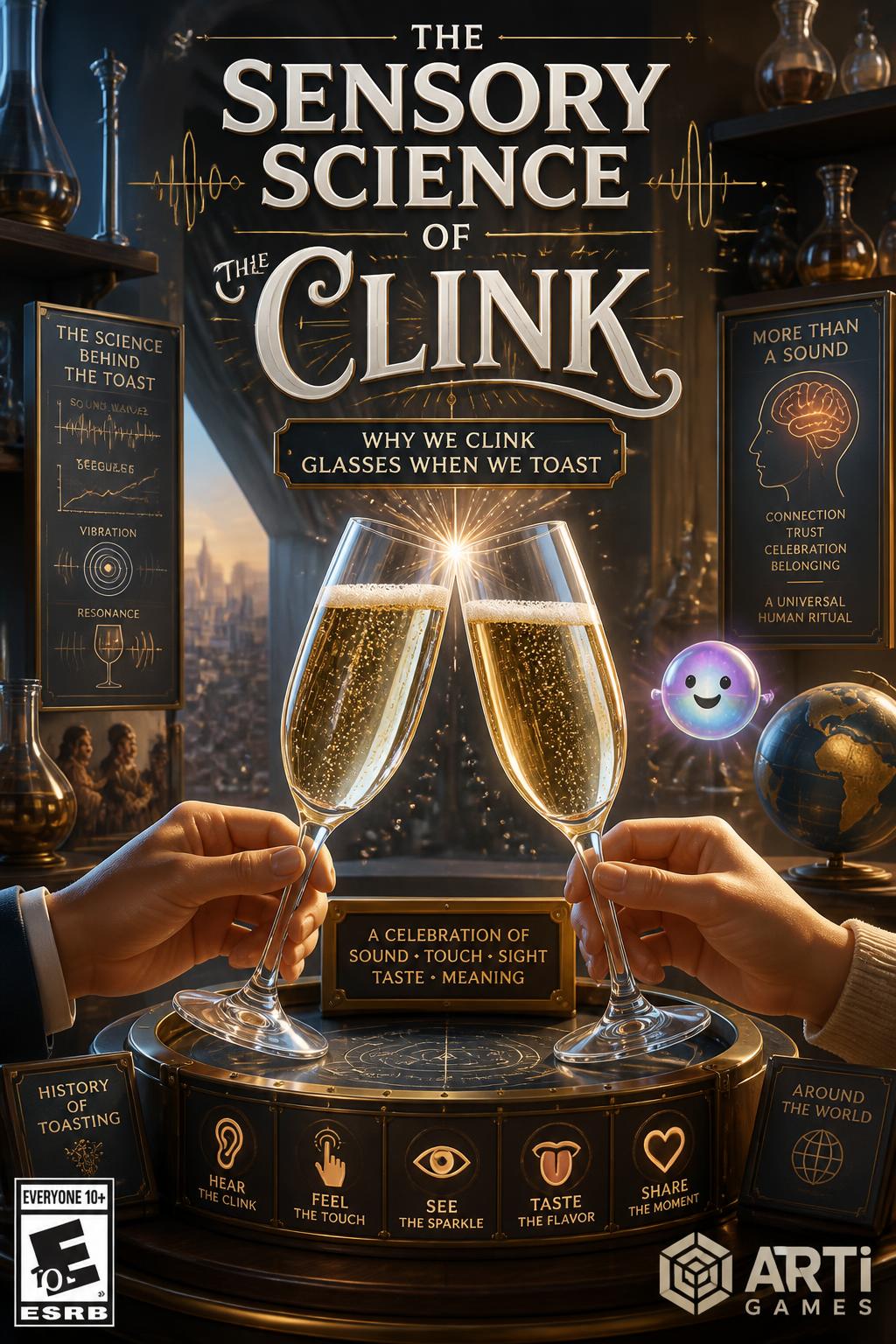
The sensory science of the clink
Chapter 2
Myths of poison and spirits
Chapter 3
Global rituals of raising a glass
Chapter 4
The evolution of the toast
YOUR GOAL
Master of Why we clink glasses
Ch 1 · The sensory science of the clink
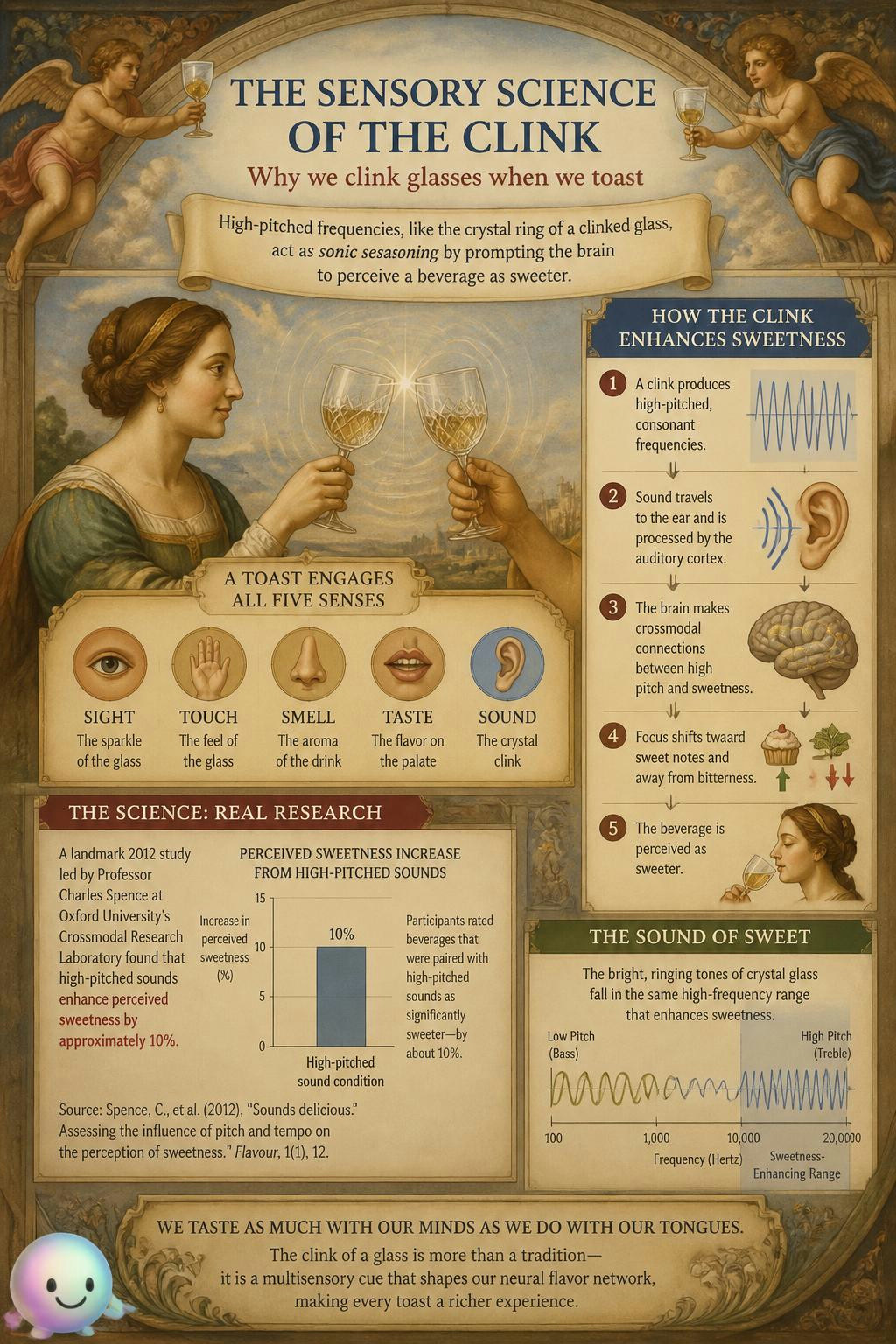
gus Explore the science of multisensory perception. Learn how glass clinking sounds can make your drinks taste sweeter in this eye-opening infographic.
misslily The Science of the Clink
Our other senses are sharing the cup, We add the perfect sound to wake the last one up.
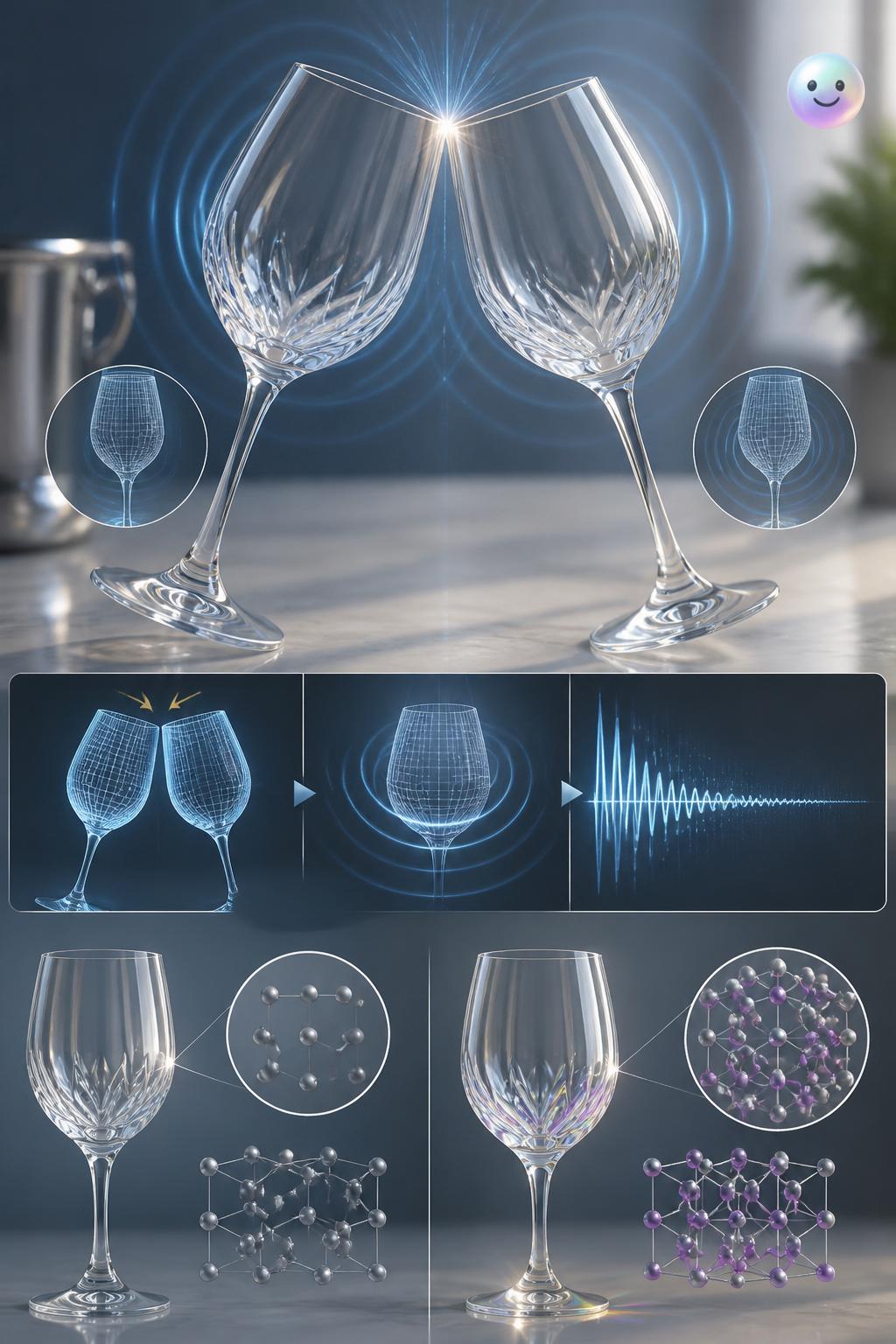
misslily Modern wine glasses are specifically designed to vibrate and ring when struck.
BETA
misslily Tap different glasses to discover how sound completes the five senses of a toast.
Fun Fact
Glass acoustics: The longest-lasting glass clink resonance comes from lead-free crystal, which can vibrate for up to ten seconds.
Glossary
clink (noun)
A sharp ringing sound, such as that made by pieces of metal or glass striking together. Historian Margaret Visser attributes the popularity of this sound to seventeenth-century Venetian glassmaking innovations.
A sharp ringing sound, such as that made by pieces of metal or glass striking together. Historian Margaret Visser attributes the popularity of this sound to seventeenth-century Venetian glassmaking innovations.
Quiz
How does a high-pitched ringing sound affect how our brains perceive the flavor of a beverage?
Quiz
What is the primary reason why ancient drinking vessels made of wood or clay did not clink?
Quiz
Which of the five senses was historically missing from drinking before we started clinking glasses?
Quiz
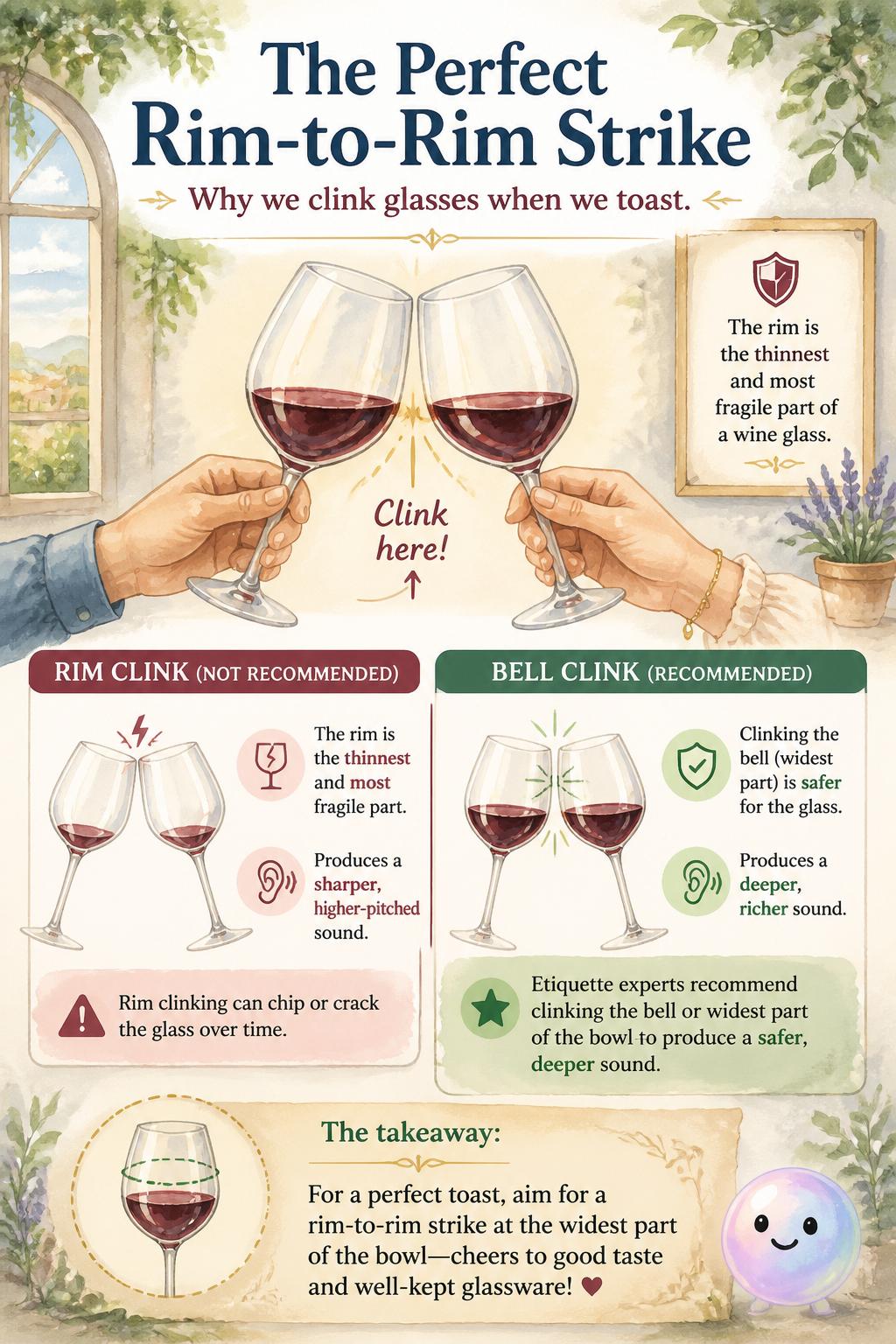
Why do etiquette experts advise clinking the bell or middle of a wine glass instead of the rim?
Quiz
What scientific field studies how ambient sounds, like a glass clinking, affect our perception of taste?
Quiz
In physics, what is the term for the vibration frequency at which a glass naturally rings?
Quiz
Which physical property of lead-free crystal allows it to ring longer than standard soda-lime glass?