


Leap Year: Definition and Calendar History
Explore the definition of a leap year, its origins under Julius Caesar in 45 BC, and the math behind keeping our calendar synchronized.
Chapter 1
The illusion of a stationary Earth
Chapter 2
The sun takes center stage
Chapter 3
The math of a year
Chapter 4
Solving the calendar puzzle
Ch 3 · The math of a year
futura Earth Orbit Calendar
The Earth spins 'round the Sun, you see, (Oh-oh, not perfectly!) Five hours and forty-eight more, (Yeah-yeah, that's what calendars are for!)
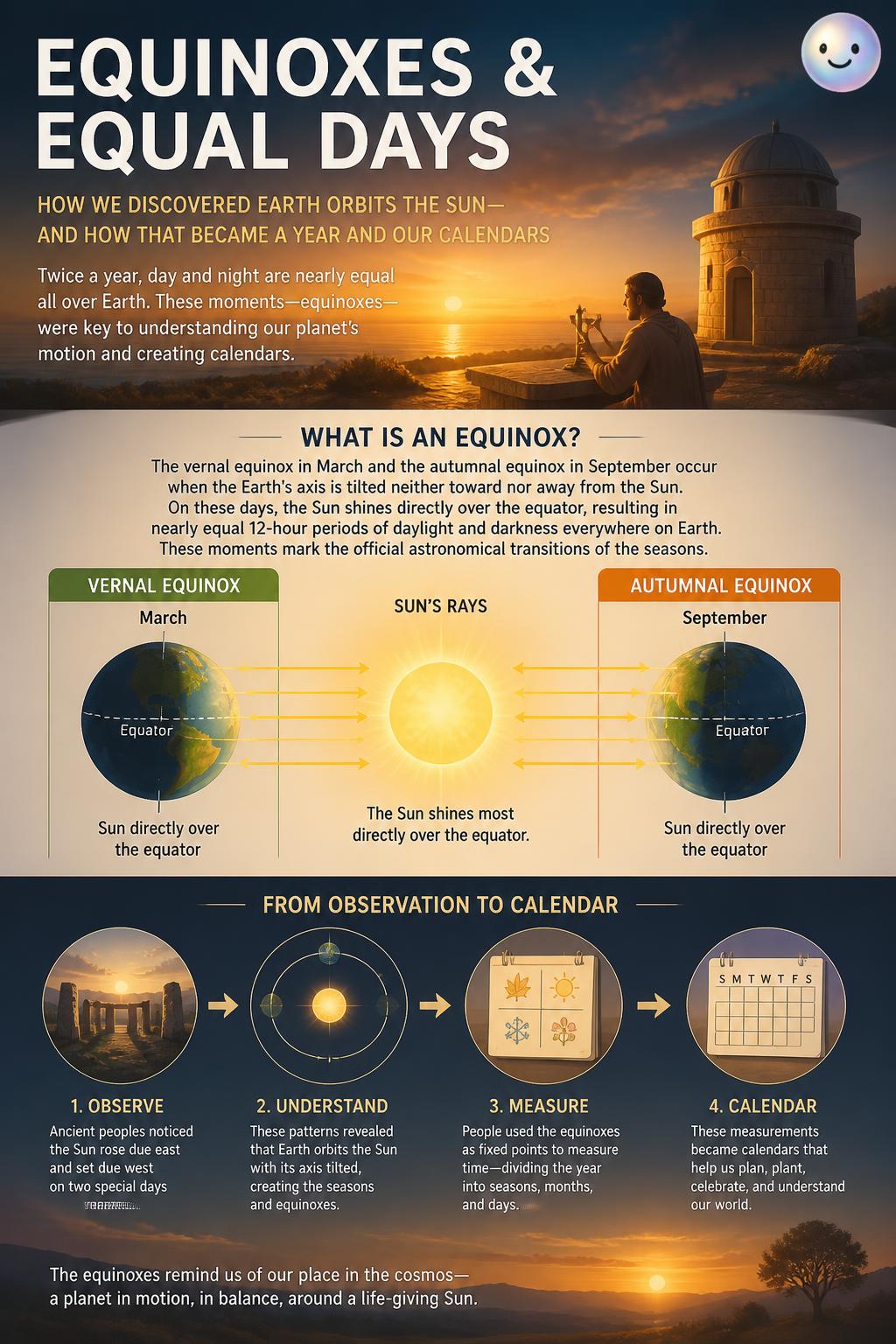
futura Twice a year, the Earth's tilt aligns perfectly with the Sun, producing equal day and night worldwide.
Fun Fact
Earth's speeding orbit: Earth travels around the Sun at a blistering speed of about 67,000 miles per hour.

futura Earth's axial tilt of 23.5 degrees causes the changing seasons and the extreme days of the solstices.
Glossary
leap year (noun)
A calendar year containing an extra day to keep it synchronized with the astronomical or seasonal year. Julius Caesar implemented this quadrennial correction in 45 BC to stabilize the Roman calendar.
