
BETA

Osamu Tezuka pioneered giant, expressive eyes in his 1952 series Astro Boy, drawing inspiration from Betty Boop and Disney's Bambi. These oversized eyes allowed artists to depict subtle emotions like sorrow, awe, and determination, which quickly became a defining visual hallmark of the medium.
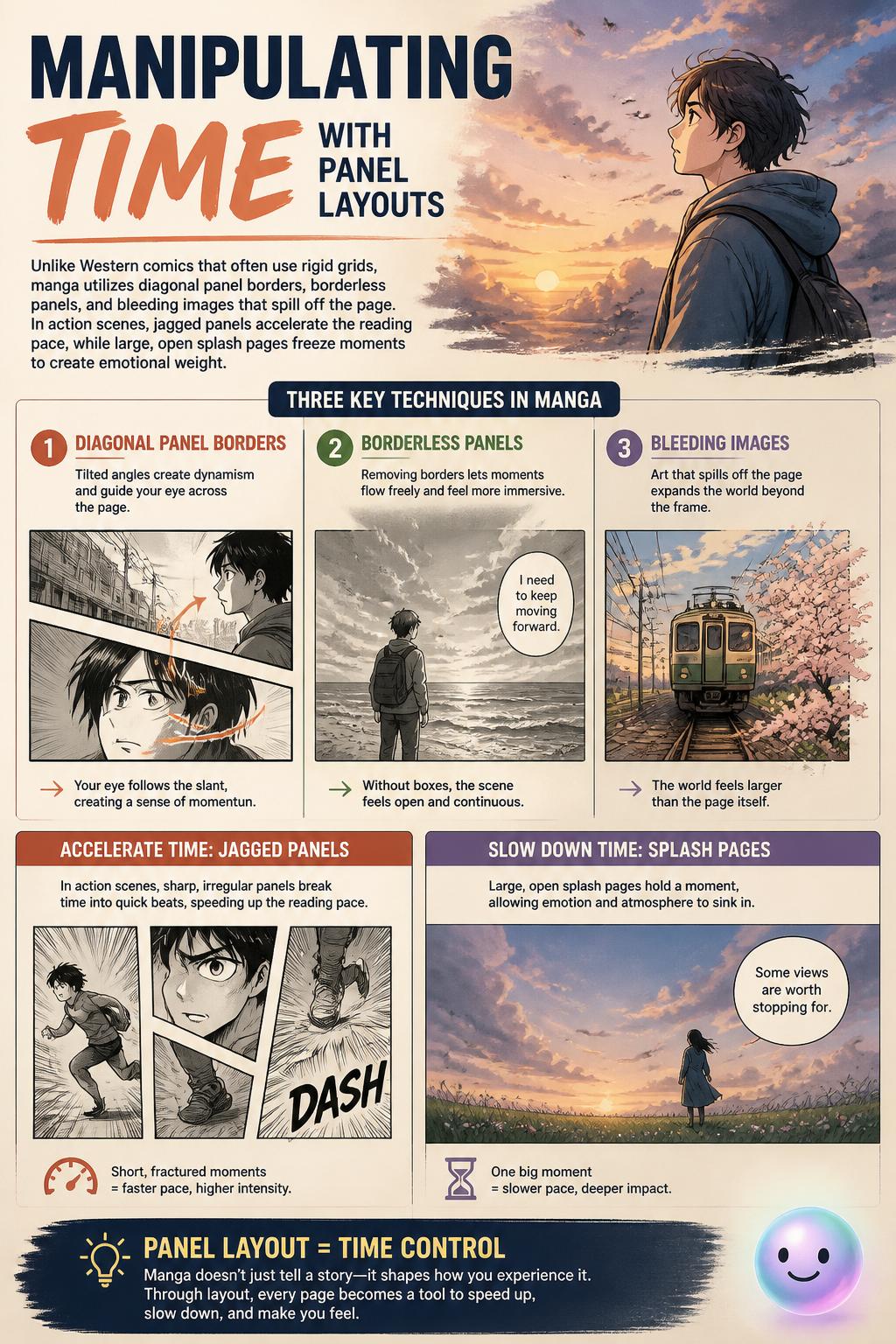
yuki Manga artists manipulate the size and shape of panels to speed up or slow down a reader's perception of time.
Manga eyes: The white glint inside a manga character's giant eyes represents the reflection of light, a visual trick borrowed directly from classic doll-making.

yuki Manga uses a unique set of visual symbols, from giant sweat drops to nosebleeds, to represent specific emotional states.
In manga visual shorthand, what does a giant sweat drop behind a character's head represent?
What physical reaction is commonly used in manga to depict a character's romantic excitement?